English
 中文简体
中文简体 русский
 عربى
عربىThe upholstery fabric on a sofa does more than determine its appearance. It governs how the sofa wears over years of use, how it feels against bare skin, how it responds to spills and everyday soiling, and how it performs in different household environments — homes with children and pets, commercial hospitality settings, humid coastal climates, or dry inland regions. A furniture manufacturer selecting a fabric for a production run, an interior designer specifying upholstery for a contract project, or a retailer building a sofa collection for a specific market segment each needs to match fabric type to the performance requirements of their application as carefully as they match the color or texture to the aesthetic direction.
This guide covers the main categories of upholstery fabric used in sofa production today, the specific performance characteristics of each, the applications they are best suited for, and the key specification parameters that determine whether a fabric from any category will perform well in a specific end use.
The Main Categories of Sofa Upholstery Fabric
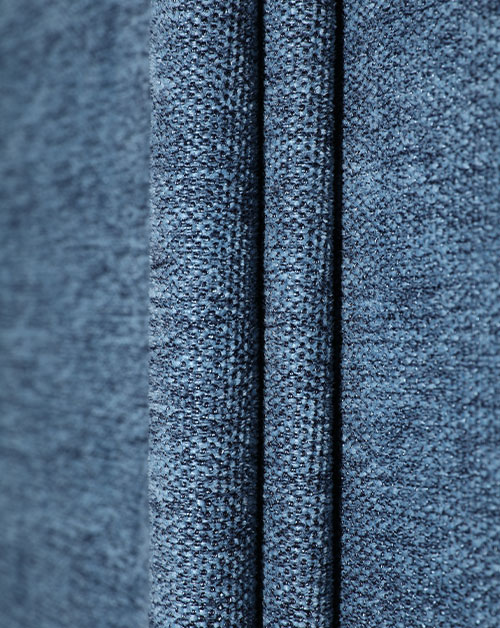
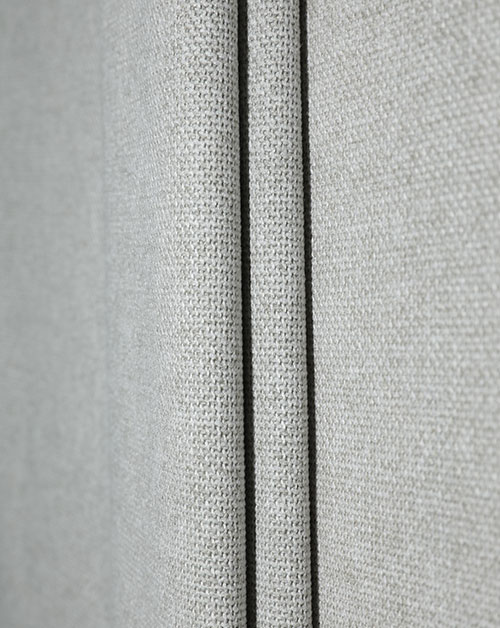
1. Woven Imitation Linen Fabric
Woven imitation linen fabric replicates the visual and tactile character of natural linen — the slub texture, the irregular surface variation, the matte, slightly coarse hand feel — using polyester, polyester-linen blends, or synthetic yarns that are woven to reproduce the linen aesthetic. The result is a fabric that delivers the natural, understated look of linen at a lower cost, with significantly better performance characteristics in several dimensions that make natural linen challenging in upholstery applications.
Natural linen wrinkles readily and can be difficult to keep taut and smooth in upholstered applications; imitation linen with a polyester component retains its shape better through repeated use and dry-cleaning. Natural linen is sensitive to moisture and can shrink or distort if exposed to water; polyester-based imitation linen is dimensionally stable in high-humidity environments. The woven construction provides good abrasion resistance appropriate for furniture that sees regular daily use.
Imitation linen is the material of choice for furniture aimed at the natural, organic, Scandinavian, and minimalist interior aesthetics that have dominated the mid-to-premium home furnishings market for much of the past decade. It reads as a natural, sophisticated material — not obviously synthetic — while providing the practical performance that furniture customers expect from upholstery in daily use. It works equally well for residential sofas, commercial lounge seating in hospitality environments, and office soft seating where a professional, calm aesthetic is required.
2. Cut Pile Fabric (Velvet / Velour Constructions)
Cut pile fabric covers a broad category of upholstery textiles where a pile — a layer of upright fibers — is created on the fabric surface through a process of weaving extra yarns as loops and then cutting those loops to create individual fiber ends standing perpendicular to the base fabric. The resulting surface is soft, dense, and has a characteristic visual directionality — it reflects light differently depending on which direction the pile lies, producing the characteristic "crush" pattern of velvet-type fabrics and a sense of depth and richness that flat woven fabrics cannot replicate.
Within the cut pile category, the main variants relevant to sofa upholstery are:
Woven cut pile (velvet): The most traditional construction, where pile yarns are interwoven with ground yarns on a loom and then cut. Provides a uniform, dense pile with good dimensional stability. Used for premium upholstery fabrics requiring the authentic velvet hand and appearance.
Knitted cut pile (knitted velour/flannel): Pile is formed by pulling out floating fibers from a knitted base fabric structure during a raising and cutting process. Typically softer and more elastic than woven velvet, with a slightly less uniform pile but a very pleasant hand feel. Widely used for residential sofas where softness and casual comfort are priorities.
Cut pile fabrics excel in residential sofas where luxurious softness and visual richness are the primary aesthetic goals. They are appropriate for formal living rooms, bedroom sofas, and accent chairs. The pile construction requires more care in terms of cleaning — surface brushing in a consistent pile direction, avoiding aggressive rubbing that disturbs the pile — but this is familiar to consumers who have experience with velvet-type soft furnishings. Cut pile fabrics are not the optimal choice for high-abrasion commercial environments where the pile can be compressed and worn in heavily used areas.
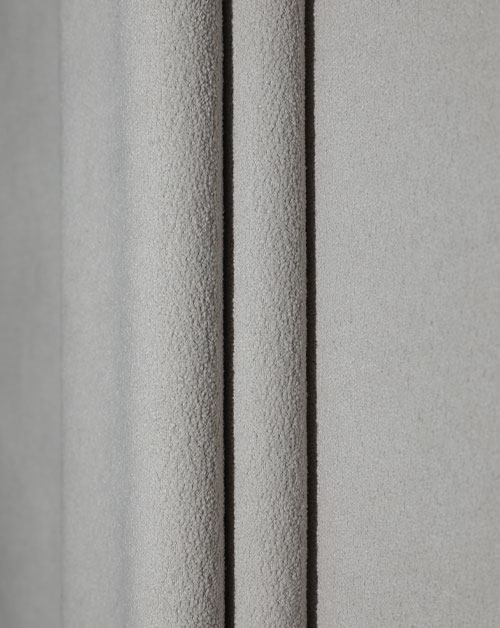
3. Brushing Fabric (Raised / Brushed Fabric)
Brushing fabric — also called brushed fabric or raised fabric — is produced by mechanically abrading the surface of a woven or knitted base fabric with rotating wire brushes that lift individual fibers from the yarn surface, creating a fine, consistent nap layer covering the fabric face. Unlike cut pile, which creates a distinct standing pile layer of consistent height, brushed fabric produces a softer, more integrated surface effect — the raised fibers remain connected to the base yarn and create a fine, even texture that adds warmth and softness without the distinct pile directionality of cut pile constructions.
Brushing is particularly effective on polyester and polyester-blend fabrics, where the mechanical raising process creates a smooth, even nap that gives the fabric a warm, suede-like quality. Brushed polyester and brushed polyester-viscose blends are widely used for sofa upholstery in the mid-market residential segment, offering a comfortable hand feel, good pill resistance on quality constructions, and easy maintenance — the flat nap surface is easier to clean and less prone to showing directional marks than deep cut pile fabrics.
Brushing fabric is appropriate for casual living sofas, family room upholstery, bedroom seating, and any application where softness, warmth, and easy care are priorities over the visual drama of velvet or the natural aesthetics of linen-look fabrics. It is a practical, cost-effective upholstery material for mid-range furniture production.
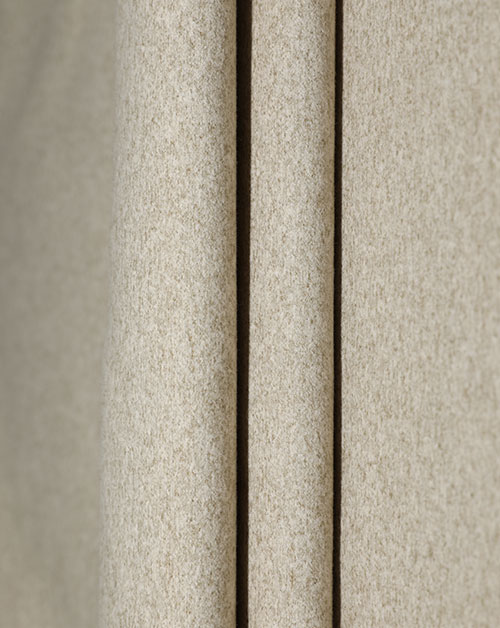
4. Functional Fabric (Performance Upholstery)
Functional fabric is a broad category that covers upholstery fabrics with one or more engineered performance properties beyond the basic requirements of weight, texture, and aesthetic appearance. The specific functional properties most relevant to sofa upholstery include:
Stain resistance / easy clean: Applied as a surface treatment (fluorocarbon finish or similar) or built into the fiber structure, stain resistance causes liquid spills to bead and roll rather than soaking into the fabric immediately, allowing blotting before the liquid can penetrate and stain. Essential for family sofas in homes with children, hospitality seating, and any application where accidental spills are frequent.
Antimicrobial/antibacterial treatment: Silver-ion or other antimicrobial finishes applied to the fabric surface inhibit the growth of bacteria, mold, and mildew within the fabric. Relevant for sofas in humid environments, healthcare or senior care settings, and consumers with sensitivity to mold and dust mites in soft furnishings.
Flame retardancy: Many markets impose mandatory flame retardancy standards on upholstered furniture — the UK's Furniture and Furnishings (Fire) (Safety) Regulations, the US's California Technical Bulletin 117-2013, and various EU standards all impose requirements that upholstery fabric must either meet independently or be used in combination with approved barrier fabrics. FR-treated upholstery fabric meets these requirements at the fabric level, simplifying furniture manufacturer compliance.
UV resistance/lightfastness: Relevant for sofas placed near windows or in sunrooms where prolonged UV exposure would fade standard fabric. UV-stabilized yarns and lightfast dye systems maintain color intensity significantly longer than standard constructions in high-light-exposure environments.
Wear/abrasion resistance: High-performance upholstery fabric for contract and commercial seating — hotel lobbies, airports, public transport, office environments — is specified by abrasion resistance (measured in Martindale cycles) at levels significantly above residential requirements. Commercial contract upholstery typically requires 40,000+ Martindale cycles; premium contract 80,000+; compared to typical residential requirements of 15,000–25,000 cycles.
5. Recycled Fabric (Sustainable Upholstery)
Recycled upholstery fabric — most commonly recycled polyester fabric produced from RPET (post-consumer PET bottle recycled fiber) — offers the same woven or knitted upholstery fabric constructions as virgin polyester, with the added dimension of certified sustainable raw material sourcing. Recycled fabric is available in woven constructions that replicate the appearance of linen, textured weaves, and structured jacquards, as well as knitted constructions for softer upholstery applications.
For furniture brands and retailers building product ranges that need to meet sustainability claims, carry eco-label certifications, or qualify for retailer sustainable product programs, GRS-certified recycled fabric provides the verified recycled content documentation required. Performance characteristics — abrasion resistance, colorfastness, and dimensional stability — are equivalent to virgin polyester fabric of the same construction when quality recycled fiber is used.
Key Performance Specification Parameters for Sofa Upholstery Fabric
| Parameter | Test Method | Residential Minimum | Contract / Commercial Minimum |
|---|---|---|---|
| Abrasion resistance | Martindale (EN ISO 12947) | 15,000 cycles | 40,000–100,000 cycles depending on application |
| Pilling resistance | EN ISO 12945-2 | Grade 3–4 minimum (5-point scale, 5 = no pilling) | Grade 4 minimum |
| Colorfastness to light | ISO 105-B02 | Grade 4 minimum (8-point scale) | Grade 5–6 for sun-exposed applications |
| Colorfastness to rubbing | ISO 105-X12 | Dry: Grade 4 / Wet: Grade 3 | Dry: Grade 4–5 / Wet: Grade 3–4 |
| Tear strength | ISO 13937-1 | ≥ 15 N warp and weft | ≥ 25 N warp and weft |
| Seam slippage | ISO 13936-2 | ≥ 6mm opening at 120 N load | ≥ 6mm opening at 200 N load |
| Flame retardancy | Market-specific: BS 5852 (UK), CAL TB 117 (US), EN 1021 (EU) | Market-dependent; confirm applicable standard | Required in most contract applications |
How to Choose the Right Upholstery Fabric Type for Your Application
Matching fabric type to application is ultimately a decision across three dimensions that must be considered together: aesthetics (what the fabric looks and feels like), performance (how it holds up to the use conditions of the application), and commercial requirements (price position, certifications, regulatory compliance). The following decision points help structure this matching process:
What is the use environment? Residential with adults only, residential with children and pets, hospitality or contract seating, healthcare or senior living, or outdoor-adjacent? Each environment has a different priority weighting between aesthetics and performance properties. Children and pets tilt the decision toward stain-resistant functional fabric or tightly woven fabrics with high Martindale ratings. Contract hospitality prioritizes abrasion resistance and flammability compliance. Natural aesthetic residential markets prioritize texture and feel.
What is the target aesthetic? Natural and organic (imitation linen), luxurious and rich (cut pile velvet), warm and casual (brushed fabric), or technically modern (smooth functional fabric)? The aesthetic direction narrows the fabric category before performance parameters are considered.
What are the regulatory requirements in the target market? UK residential upholstered furniture must pass BS 5852; US furniture may need to comply with California TB 117-2013 or market-specific state requirements; many EU markets have EN 1021 requirements for contract seating. Confirming the applicable regulations before fabric selection — rather than after — avoids costly late-stage changes to specifications.
Are sustainability credentials required? If the furniture brand requires verified recycled content, GRS-certified recycled fabric is the appropriate choice. If low environmental impact is a priority but specific certification is not mandatory, other responsible material choices exist. Clarify whether the requirement is for verified, certified sustainability claims (requiring GRS or equivalent) or for general sustainability positioning (which can be served by a wider range of material choices).
Frequently Asked Questions
What is the difference between velvet and cut pile fabric in upholstery?
Velvet is a specific type of cut pile fabric — one of several categories within the broader cut pile classification. The term "velvet" originally referred specifically to woven cut pile fabrics with very short, dense, uniform pile produced on specialized looms. In modern usage, "cut pile fabric" encompasses a wider range of constructions, including knitted velour and other pile fabrics where the pile is created by cutting, while "velvet" tends to refer specifically to the woven, short-pile, high-sheen variety. In upholstery applications, both terms are often used loosely to describe any soft, pile-surfaced fabric — but technically, all velvet is cut pile fabric, while not all cut pile fabric is velvet.
How do I specify the weight of upholstery fabric correctly?
Upholstery fabric weight is specified in grams per square meter (gsm or g/m²). For sofa upholstery, the appropriate weight range depends on the construction type: woven fabrics (imitation linen, jacquard, flat woven) typically range from 200–500 gsm, with heavier weights providing better abrasion resistance and fuller hand feel; pile fabrics (cut pile, velvet) typically range from 350–600 gsm with pile weight included; brushed fabrics typically range from 180–350 gsm. Heavier weight alone does not guarantee better performance — the construction, fiber type, and finishing are equally important — but weight is a useful initial filter for evaluating whether a fabric is suited to upholstery use versus lighter decorative applications.
Can the same fabric be used for both sofa upholstery and curtains?
Some fabric types — particularly mid-weight woven imitation linen and functional fabrics — are used in both sofa upholstery and curtain applications, but the performance requirements differ, and not all sofa upholstery fabrics are appropriate for curtains, and vice versa. Curtain fabrics need good drape (dimensional flexibility to fall naturally), appropriate weight for the window dimensions, and colorfastness to light given prolonged sun exposure. Upholstery fabrics need abrasion resistance, seam strength, and dimensional stability under repeated stress. A fabric optimized for curtain drape may be too light or have insufficient seam strength for upholstery; a heavy, stiff upholstery fabric will not drape well as a curtain. For dual-use applications, specify the performance requirements of both end uses to the fabric supplier and confirm the fabric meets both sets of requirements before committing.
Sofa Upholstery Fabrics from Suzhou Yifan Textile
Suzhou Yifan Textile Co., Ltd., based in Zhenze Town, Wujiang, Jiangsu, is a specialist manufacturer of upholstery and decorative fabrics for the sofa and home textile industry, with in-house spinning and weaving capability. The product range covers woven imitation linen fabric, cut pile fabric, brushing fabric, recycled fabric (GRS-certified options available), and functional fabric — the full range of fabric types covered in this guide — all produced for furniture manufacturers, interior designers, and home textile brand customers globally. OEM and ODM development services available for custom colorways, constructions, and certifications.
Contact us to request a fabric sample book, product specifications, and pricing for your upholstery sourcing requirements.
Related Products: Woven Imitation Linen Fabric | Cut Pile Fabric | Brushing Fabric | Recycled Fabric | Functional Fabric